


















Stress shows up on your face before it shows up in your calendar
How stress shows up physically in men and why it's often missed
Stress Rarely Announces Itself
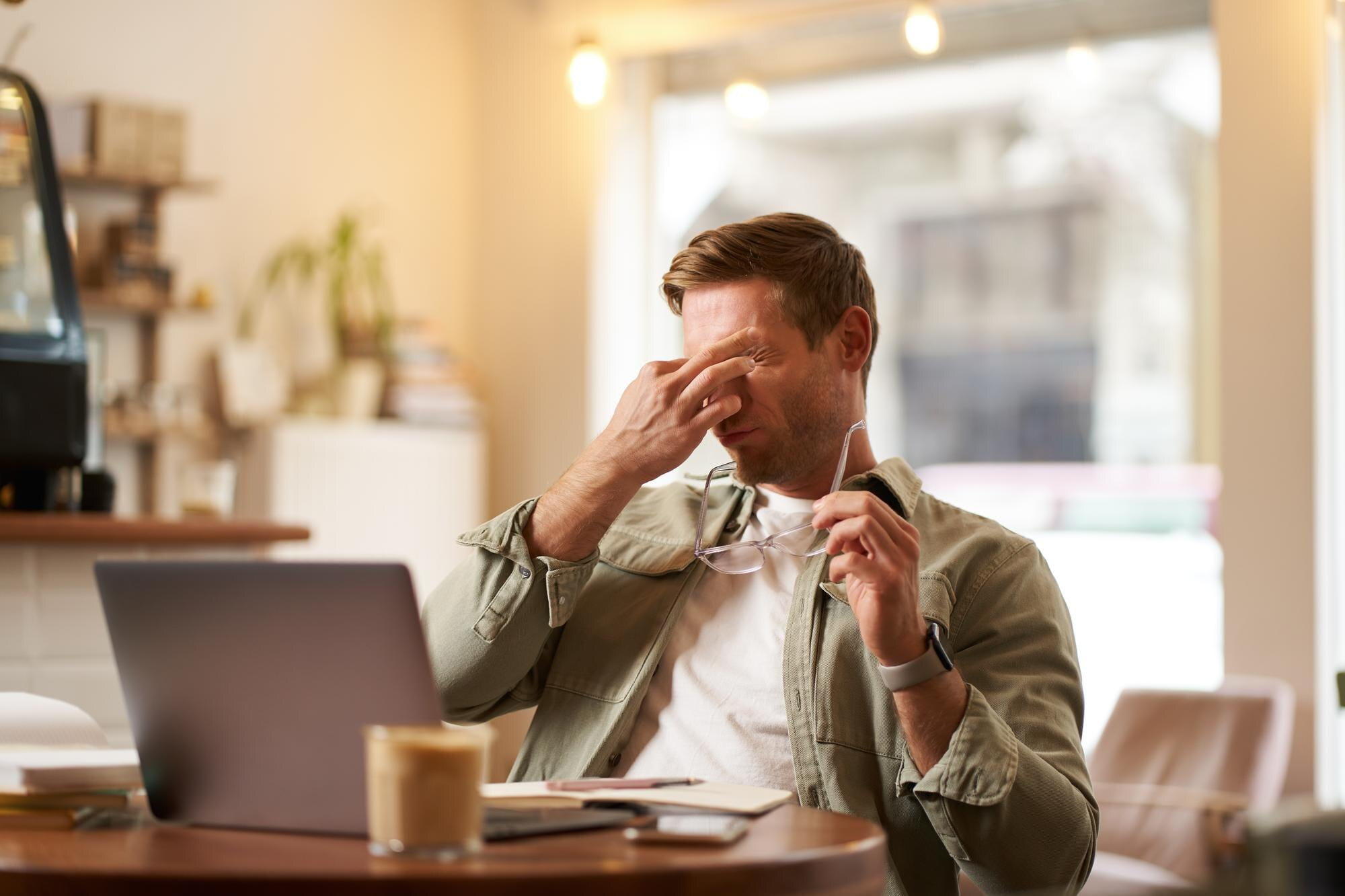
It doesn't always arrive as panic or overwhelm, or even as a clear sense that something is wrong. For many men, it appears quietly, accumulating in ways that are easy to dismiss: a tight jaw, permanently raised shoulders, waking up already alert, looking tired even after a decent night's sleep.
None of these feel dramatic enough to warrant concern, yet together they tell a story. Before stress forces its way into diaries, inboxes, or conversations, it often settles into the body. And the face is usually one of the first places it shows.
The Physical Language of Modern Pressure
Modern stress is different from the kind our bodies evolved to handle. It's rarely a short burst followed by recovery. Instead, it's persistent, low-level, and mentally demanding: deadlines that roll into evenings, phones that keep work within reach at all hours, and a sense of always needing to be available, responsive, switched on.
Even when nothing feels acutely wrong, the nervous system rarely gets the message that it's safe to stand down. Over time, that state becomes visible. Facial tension increases. Skin can appear dull or tired. Expressions harden without intention.
These aren't aesthetic flaws. They're physical responses to sustained pressure. What's notable is how many men recognise these signs in hindsight. They don't feel stressed, but they look it. The mirror notices before the mind does.
Why Men Tend to Miss the Early Signs
Men are often good at functioning through discomfort. They've been conditioned to. Stress, particularly when it's not dramatic, is easy to rationalise away. You tell yourself it's just a busy period, that things will settle down soon, that everyone feels like this. And to an extent, that's true.
Stress is part of modern life. The issue isn't its presence, but its accumulation. When stress becomes background noise, it stops triggering alarm bells. It becomes something you live with rather than something you respond to. By the time it shows up in your calendar as missed breaks, shortened weekends, or constant fatigue, it's already been shaping how you feel and look for some time. This pattern isn't a personal failing. It's a cultural one.
Stress and the Face You Present to the World
There's a reason people comment on looking tired before they ask how you're feeling. The face carries information. Eyes lose softness. The brow tightens. Skin reflects fatigue even when sleep hasn't dramatically worsened. These changes are subtle, but they affect how men see themselves and how they're perceived by others.
For many men, this is the point at which stress becomes harder to ignore. Not because of vanity, but because it starts to affect confidence. When you don't quite recognise the person looking back at you, it creates friction. You feel less at ease. Less comfortable. Less yourself. This is where self-care becomes relevant, not as a solution, but as awareness.
A Shift in How Stress Is Understood
Culturally, the conversation around stress has changed. It's no longer framed solely as an internal weakness or a lack of resilience. There's greater recognition that modern systems are demanding in ways that don't allow for easy recovery.
The World Economic Forum has repeatedly highlighted stress and burnout as defining challenges of contemporary working life, particularly as digital tools blur the boundary between work and rest. The expectation to be constantly available has consequences, even when it feels manageable.
At the same time, wellbeing conversations have moved away from extremes: less focus on eliminating stress entirely, more on recognising it earlier and managing it more sustainably. That change matters for men, many of whom were never encouraged to tune into early signals.
Stress, Skin and Self-Care
The link between stress and the skin is often discussed in simplistic terms, but at its core it's about balance. When the body remains in a heightened state for long periods, it prioritises survival over restoration. The NHS consistently frames stress management as part of overall wellbeing, not something to be tackled in isolation.
It's not about removing pressure from life, but about supporting the body's ability to recover. For men, this reframing is important. It moves the conversation away from fixing or hiding signs of stress, and towards understanding what they represent. Self-care in this context isn't indulgent. It's interruptive. It creates moments where the nervous system is allowed to downshift, even briefly.
Why Appearance Often Becomes the Trigger
Many men don't act on stress because they "feel stressed". They act because they notice changes in themselves: looking more tired than expected, feeling permanently tense, catching a glimpse of yourself and thinking something feels off.
These moments create permission to pay attention. That doesn't mean self-care is about appearances alone. But appearance can be an entry point, a signal that something internal deserves consideration. This is why stress-related self-care often starts with practical, physical actions. Not because they solve stress, but because they create awareness. They slow things down enough for reflection to happen.
The Growing Interest in Stress-Related Wellbeing
Globally, interest in stress and wellbeing continues to rise. According to insights from the Global Wellness Institute, stress management is one of the fastest-growing areas within the wellness economy, driven by working-age adults navigating sustained pressure. Search trends reflect the same pattern.
More people are looking for ways to recognise stress, manage it earlier, and integrate recovery into daily life rather than treating it as an emergency response. Men are increasingly part of this shift, not loudly, but consistently. The language has changed: less about coping, more about balance; less about resilience as endurance, more about resilience as adaptability.
Stress, Confidence and Presence
Unchecked stress doesn't just affect how men look. It affects how they show up. When stress levels are high, confidence often becomes brittle. Small setbacks feel heavier. Social interactions require more effort. Even decision-making can feel draining.
This isn't a lack of capability. It's a depletion of capacity. Self-care that acknowledges stress early helps preserve presence. It allows men to stay engaged without feeling constantly braced. Over time, that has a quiet but meaningful impact on confidence. Not bravado. Just steadiness.
Paying Attention Sooner
Stress will always be part of life. The difference is whether it's noticed early or allowed to settle in unnoticed.
For many men, the face becomes the first messenger, not as a warning sign, but as a quiet prompt to pause. Listening to that prompt doesn't mean overhauling your life. It means recognising that self-care isn't a reaction to crisis. It's an ongoing conversation with yourself, one that starts, more often than not, with noticing what's already there.
More on Anti-Age
Regeneration Is the New Standard: How Modern Men Protect Their Edge
Regeneration Is the New Standard: How Modern Men Protect Their Edge
4 Mar 2026 · 2 min read

Confidence without bravado
How ideas of men’s confidence are changing
18 Jan 2026 · 5 min read
Sleep is the most underrated form of self-care
Sleep and wellbeing for modern men
29 Dec 2025 · 4 min read
Ready to take action?
Browse trusted UK clinics and book the treatment that's right for you.
Browse treatments